

Used Isobaric Complete Bottling Line for Still and Sparkling Wine up to 4500 bph




Basic data
- Machine number:
- LC579
- Condition:
- used
Price & Location
- Seller location:
- Via Incisa 1, 37022 Fumane (Verona), Italy
Details about the offer
- Listing ID:
- A197-36985
- Reference number:
- LC579
- Update:
- 03.09.2026
Description
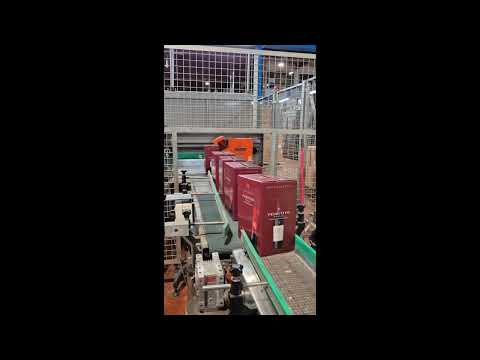
This complete bottling line has been designed and configured to provide a high-quality, consistent filling process for both still and sparkling wines. Built around an isobaric tribloc system, it integrates rinsing, filling, and capping functions in a continuous flow, ensuring excellent efficiency while maintaining product integrity. The line is currently set up for still wines at an output of 4,500 bottles per hour and for sparkling wines at 3,000 bottles per hour.
It is already technically prepared for sparkling wine production and only requires the addition of a mushroom corker, a capsule applicator for spumante hoods, and a heating tunnel if needed.
The system is equipped with dedicated conveyors, a centralized lubrication system, and separate control panels for conveyor management, enabling straightforward maintenance and integration into existing plant automation. The entire layout follows a linear configuration, optimised for space utilisation and ensuring smooth product transfer between each stage without unnecessary accumulation points.
Bottling Process and Core Machinery
At the start of the line, empty bottles are automatically fed into the system via a depalletizer. This equipment gently lifts and transfers the bottles onto the feeding table while maintaining their integrity. Bottles are then directed to the tribloc system, where three key operations are performed in sequence: rinsing, filling, and capping.
The isobaric filling technology ensures precise fill levels and consistent carbonation retention for sparkling wines, while also being perfectly suited for still wine bottling. The filling valves are designed to minimise oxygen pickup, which is crucial for preserving the wine’s sensory qualities and shelf life. The rinser operates with clean water or a sanitising solution, ensuring bottles are free from contaminants prior to filling. The capping turret, currently configured for still wine closures, applies either BVS screw caps or traditional corks, depending on the selected format.
Nsdpfxjw Imp Hj Afgjlh
A dosing unit for gum arabic is integrated into the line. This system allows for precise addition of stabilising agents post-filling, which helps maintain wine clarity and prevent precipitation during storage. A dedicated steam generator (vapouriser) is included for both line sanitisation and, when required, pre-heating applications.
Prior to filling, a microfiltration unit is positioned to ensure that the product entering the tribloc meets the desired microbiological standards. This step is essential for ensuring product stability and quality without the need for excessive chemical preservatives.
Downstream, bottles are transferred to the labelling station. While the labelling unit is supplied by a third-party manufacturer, it is elect...
Documents
Seller
Registered since: 2021
342 listings online

Send inquiry
Telephone & Fax


 Bayern
 StillRX20-18


 Bayern
 LindeH80/900T


 Bayern
 Still24V


 Bayern
 FEM33.000kg


 Bayern
 LindeH35T


 Bayern
 LindeH 25D


 Bayern
 LindeH 25D


 Bayern
 LindeE 18


 Bayern
 LindeH 30T-02


 Bayern
 LindeE 20PL

Used-Machines Trust Seal
What is the trust seal?
Used-Machines certifies selected sellers with the Used-Machines trust seal. Before approval, a standardized and comprehensive check is carried out by experienced Used-Machines staff.
What do we verify?

Check of
trade licence or commercial register extract
Verification of the dealer's
postal address
Validation of the
banking details
Verification of
accessibility to
main phone number
Credit report
may not contain negative criteria
Buyer complaints
can lead to withdrawal of the sealWhat does this mean for you as buyer?
The Used-Machines trust seal enables you, as a buyer, to identify trustworthy sellers who are very likely to do honest and righteous business, without having to do your own investigation.
Disagreements may of course still arise during the purchasing process. Used-Machines is not liable for any legal violations by buyers or sellers active on Used-Machines.