

Crushing equipmentMingyuan Stone & rock impact crusher
Impact crusher for sand gravel crushing


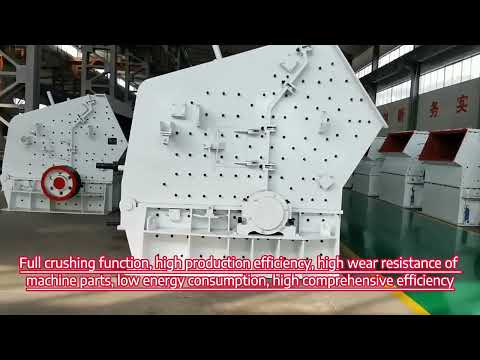


Machine data
- Machine type:
- Crushing equipment
- Manufacturer:
- Mingyuan Stone & rock impact crusher
- Year of construction:
- 2025
- Condition:
- new
- Functionality:
- fully functional
Price & Location
- Location:
- Dahuangye Industrial zone, XinXing East RD, Gongyi, 451200 Zhengzhou, China
Technical details
- Power:
- 75 kW (101.97 HP)
Details about the offer
- Listing ID:
- A186-35881
- Update:
- 06.03.2026
Description
An impact crusher is a high-efficiency crushing machine widely used in mining, cement, construction, and recycling industries. It is designed to crush materials by utilizing the energy of impact rather than pressure, making it ideal for medium-hard and soft materials such as limestone, gypsum, coal, and concrete aggregates. Its ability to produce uniform, cubic-shaped particles makes it a preferred choice for aggregate production and fine crushing applications.
Working Principle
The impact crusher operates on a simple yet powerful principle: material is fed into the crushing chamber and struck by high-speed rotating blow bars mounted on a rotor. The kinetic energy from the rotor transfers to the material, causing it to break upon collision with the impact plates (also known as breaker plates). The crushed material rebounds within the chamber for secondary impacts until it reaches the desired size and exits through the discharge opening.
The process involves:
Primary Impact: Material is hit by blow bars and thrown against the impact plates.
Secondary Impact: Rebounded fragments collide again with the rotor or other particles, achieving finer crushing and better shape.
Structural Composition
An impact crusher consists of several key components that ensure efficient operation and durability:
Rotor Assembly: The core component, equipped with blow bars that deliver high-speed impact energy.
Impact Plates (Aprons): Adjustable plates that control the crushing gap and final product size.
Feed Inlet and Discharge Outlet: Designed for smooth material flow and uniform discharge.
Frame and Housing: Heavy-duty welded structure providing stability and vibration resistance.
Adjusting Device: Hydraulic or mechanical system for controlling the gap between rotor and impact plates.
Safety Mechanism: Hydraulic opening system for easy maintenance and overload protection.
Technical Highlights
Feed size: ≤500 mm
Discharge size: 0–60 mm (adjustable)
Capacity: 30–800 t/h
Motor power: 45–560 kW
Rotor speed: 500–1500 rpm
Performance Features:
High Crushing Efficiency: The high-speed rotor and optimized chamber design ensure strong impact force and high reduction ratio.
Chodpev E Ddlofx Aqwjb
Excellent Particle Shape: Produces cubic, uniform aggregates suitable for concrete and asphalt production.
Adjustable Output Size: Hydraulic or mechanical adjustment allows precise control of product size.
Easy Maintenance: Replaceable blow bars and liners with quick access doors simplify servicing.
Versatile Applications: Suitable for primary, secondary, and tertiary crushing in various industries.
Types of Impact Crushers
Horizontal Shaft Impact (HSI) Crusher:
Uses a horizontal rotor to deliver impact energy. Ideal for soft to medium-hard materials and widely used in aggregate and recycling applications.
Conclusion
The impact crusher combines high-speed impact energy with a robust structural design to deliver efficient, reliable, and versatile crushing performance. Its ability to produce well-shaped aggregates, adjustable output sizes, and low maintenance requirements make it indispensable in modern crushing systems. Whether in mining, construction, or recycling, the impact crusher remains a key machine for achieving high productivity and superior material quality.
Seller
Registered since: 2024
50 listings online

Send inquiry
Telephone & Fax

Used-Machines Trust Seal
What is the trust seal?
Used-Machines certifies selected sellers with the Used-Machines trust seal. Before approval, a standardized and comprehensive check is carried out by experienced Used-Machines staff.
What do we verify?

Check of
trade licence or commercial register extract
Verification of the dealer's
postal address
Validation of the
banking details
Verification of
accessibility to
main phone number
Credit report
may not contain negative criteria
Buyer complaints
can lead to withdrawal of the sealWhat does this mean for you as buyer?
The Used-Machines trust seal enables you, as a buyer, to identify trustworthy sellers who are very likely to do honest and righteous business, without having to do your own investigation.
Disagreements may of course still arise during the purchasing process. Used-Machines is not liable for any legal violations by buyers or sellers active on Used-Machines.