

Crushing equipmentSpring & Hydraulic cone crusher
Spring & Compound&Hydraulic cone crusher


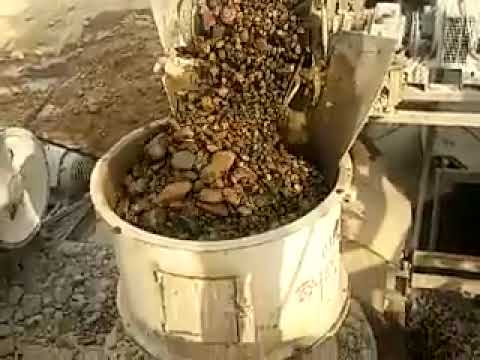


Basic data
- Machine type:
- Crushing equipment
- Manufacturer:
- Spring & Hydraulic cone crusher
- Year of construction:
- 2026
- Condition:
- new
- Functionality:
- fully functional
Price & Location
- Location:
- Dahuangye Industrial zone, XinXing East RD, Gongyi Gongyi, 451200 Zhengzhou, China
Technical details
Motor and gearbox
Details about the offer
- Listing ID:
- A163-58017
- Update:
- 06.03.2026
Description
Cone crushers are vital in mining, metallurgy, and aggregate production, designed for secondary and tertiary crushing of hard and medium-hard materials. Among the most common types are the spring cone crusher and the hydraulic cone crusher, each offering distinct advantages in structure, performance, and control.
Spring Cone Crusher
The spring cone crusher is a traditional design that uses mechanical spring systems for overload protection. When uncrushable material enters the crushing chamber, the spring mechanism allows the bowl liner to move downward, preventing damage to the crusher. Once the foreign object passes, the springs restore the original position, ensuring continuous operation.
Structural Composition:
Main frame and base assembly
Eccentric shaft and transmission system
Fixed and moving cones (mantle and concave)
Spring and adjustment mechanism
Working Principle:
Material is fed into the crushing chamber and compressed between the mantle and concave. The laminated crushing principle ensures that particles are crushed by both impact and pressure, producing uniform and well-shaped aggregates.
Technical Highlights:
Feed size: ≤300 mm
Discharge size: 3–60 mm
Capacity: 30–700 t/h
Motor power: 75–400 kW
Advantages: Simple structure, low maintenance cost, stable performance, and reliable overload protection.
Applications:
Widely used in crushing granite, basalt, iron ore, copper ore, and limestone. It is suitable for medium-scale operations where cost efficiency and durability are priorities.
Hydraulic Cone Crusher
The hydraulic cone crusher is an advanced evolution of the spring design, integrating hydraulic systems for improved automation, safety, and precision. It replaces the mechanical spring system with hydraulic cylinders that control the discharge opening and provide overload protection.
Structural Composition:
Main frame and eccentric assembly
Hydraulic cylinders and control system
Crushing chamber with optimized liner design
Automatic lubrication and hydraulic adjustment units
Pgjdpfxjtxhybe Amxet
Working Principle:
The hydraulic system adjusts the discharge opening and releases pressure automatically when uncrushable material enters. This prevents mechanical damage and allows the crusher to resume operation quickly. The combination of high-speed eccentric motion and optimized chamber geometry enhances crushing efficiency and product quality.
Technical Highlights:
Feed size: ≤320 mm
Discharge size: 3–50 mm
Capacity: 45–1200 t/h
Motor power: 90–630 kW
Advantages: Automatic cavity cleaning, precise control, high crushing ratio, and superior particle shape.
Applications:
Ideal for large-scale mining, aggregate production, and high-demand crushing lines requiring consistent output and minimal downtime.
Comparative Overview
Both crushers operate on the same compression principle but differ in control and automation. The spring cone crusher offers simplicity and cost-effectiveness, making it suitable for stable working conditions. The hydraulic cone crusher provides advanced control, faster adjustment, and higher efficiency, ideal for modern, large-capacity plants.
Seller
Registered since: 2024
50 listings online

Send inquiry
Telephone & Fax

Used-Machines Trust Seal
What is the trust seal?
Used-Machines certifies selected sellers with the Used-Machines trust seal. Before approval, a standardized and comprehensive check is carried out by experienced Used-Machines staff.
What do we verify?

Check of
trade licence or commercial register extract
Verification of the dealer's
postal address
Validation of the
banking details
Verification of
accessibility to
main phone number
Credit report
may not contain negative criteria
Buyer complaints
can lead to withdrawal of the sealWhat does this mean for you as buyer?
The Used-Machines trust seal enables you, as a buyer, to identify trustworthy sellers who are very likely to do honest and righteous business, without having to do your own investigation.
Disagreements may of course still arise during the purchasing process. Used-Machines is not liable for any legal violations by buyers or sellers active on Used-Machines.