


Used Pellet Mill, Pellet Mill, Pellet Plant for sale (12,665)
Sort results
- Lowest price Highest price
- Newest listings Oldest listings
- Shortest distance Farthest distance
- Newest year of manufacture Oldest year of manufacture
- Latest update Oldest update
- Manufacturer A to Z Manufacturer Z to A
- Relevance
- Lowest price
- Price
- Highest price
- Price
- Newest listings
- Release date
- Oldest listings
- Release date
- Shortest distance
- Distance
- Farthest distance
- Distance
- Newest year of manufacture
- Year of construction
- Oldest year of manufacture
- Year of construction
- Latest update
- Update
- Oldest update
- Update
- Manufacturer A to Z
- Manufacturer
- Manufacturer Z to A
- Manufacturer
- designation from A to Z
- Description
- designation from Z to A
- Description
- Model from A to Z
- Model
- Model from Z to A
- Model
- Lowest reference
- Ref.No.
- Highest reference
- Ref.No.
- Shortest runtime
- Runtime
- Longest duration
- Runtime
- Relevance
- Relevance
Listing


 Turkey
9,817 km
Crushing equipment
Mobile Limestone Crusher PlantGNR 03
Call
Condition: new, functionality: fully functional, power: 250 kW (339.91 HP), fuel type: electric, color: dark red, Year of construction: 2026, GNR 03 Mobile Lime Stone Crusher and Screening Plant has a capacity of 250 / 350 TPH.
It can easily break stones of different hardness.
Complies with international shipping standards.
Installation and commissioning is done in a short time.
Local workers (staff) are taught how to control.
Lifetime spare parts support is provided.
OPTIONAL
- By-pass system
- Magnetic magnet
Cjdpjwnqfgjfx Ac Dsha
- Generator System
- Dust Removal System
- Frequency Control System is used instead of soft starter
- Control cabin and air conditioning
Please call us for our other crushing plants and customized solutions.
Listing


 Zheng Zhou Shi
11,505 km
Crushing equipment
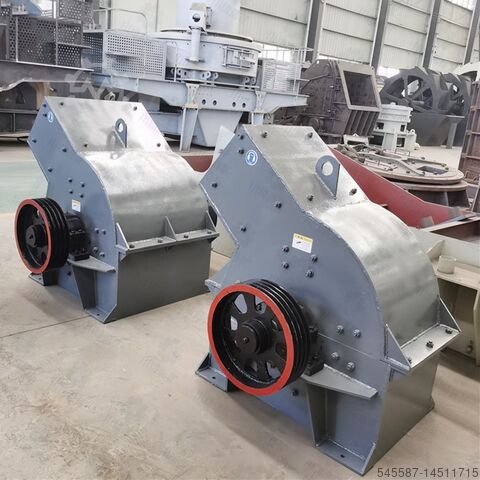
Hammer crusher /Hammer milllimestone, coal gangue,concrete crusher

Call
Condition: new, power: 55 kW (74.78 HP), Year of construction: 2026, A hammer crusher is a machine that uses high-speed rotating hammers to crush and break materials into smaller pieces. It is commonly used in various industries, including mining, cement, construction, metallurgy, and chemical processing. The basic principle of a hammer crusher involves a central rotor with hammers or blades that rotate and impact the material being crushed against a hard surface.
Here are the key features and components of a typical hammer crusher:
1. Rotor:
- The rotor is a central component of the hammer crusher. It usually consists of a shaft with multiple discs or hammers attached.
- The rotor's rotation causes the hammers to swing outward, impacting the material.
2. Hammers:
- Hammers are the striking or crushing elements attached to the rotor. They can be fixed or pivotally attached.
- The material is crushed as the hammers impact it, generating kinetic energy.
3. Casing or Housing:
- The casing or housing encloses the rotor and hammers, providing structural support and safety.
- It also serves to contain the crushed material and direct it to the desired discharge point.
4. Grate Bars or Screens:
- Positioned at the bottom of the crusher casing, grate bars or screens control the size of the crushed material by allowing smaller particles to pass through while keeping larger ones inside for further crushing.
5. Impact Plate:
- Located near the bottom of the crusher, the impact plate absorbs the impact energy generated by the hammers and prevents excessive wear on the casing.
Csdoq I Nxdjpfx Ac Deha
6. Drive System:
- The hammer crusher is powered by a motor connected to the rotor through a drive belt or coupling.
- The motor provides the necessary power to rotate the rotor, enabling the hammers to crush the material.
7. Adjustable Discharge:
- Some hammer crushers feature an adjustable discharge, allowing users to control the size of the crushed material by adjusting the gap between the impact plate and the hammers.
8. Applications:
- Hammer crushers are used for crushing a variety of materials, including coal, limestone, gypsum, aggregates, and various minerals.
- They are commonly employed in the mining industry for primary and secondary crushing of ore.
- In the cement industry, hammer crushers are used to crush limestone and other materials before they are mixed into the raw meal.
9. Maintenance and Safety:
- Regular maintenance is essential to ensure the efficient operation of a hammer crusher. This includes checking and replacing worn hammers, inspecting the rotor, and lubricating moving parts.
- Safety features, such as access doors and safety guards, are typically incorporated to prevent accidents during operation and maintenance.
Technical Specifications (Typical MINGYUAN Series)
Model Category,Max Feed Size,Capacity (t/h),Motor Power (kW),Rotor Speed (rpm)
Small (PC-400), ≤100mm, 5 – 10, 11, "1,000"
Medium (PC-800),≤200mm, 20 – 50, 55, 750 – 900
Heavy (PC-1200),≤350mm, 80 – 110, 132 – 160, 600 – 750
Heavy Hammer,"≤1,200mm", "500 – 1,000+ ","400 – 1,000" ,Variable
Listing


 Zheng Zhou Shi
11,505 km
Mill / grinding mill
Batch Ball Mill, Silica grinding millQuartz ball mill, silica powder grinding
Call
Year of construction: 2026, condition: new, ceramic ball mill ,Batch ball mill ,also called ceramic ball mill ,it is used for fine grinding of feldspar,quartz,clay,ore and so on.The ceramic ball mill is mainly used for material mixing, grinding,uniform product fineness,and saving power.It can be dry or wet.The machine can use different liner types according to production needs to meet different needs.The fineness of the grinding operation is controlled by the grinding time
ceramic ball mill Working principle
when ball mill working,steel balls inside drum will rotate with the drum to some height,and then steel balls fall down with materials to reach the point of grinding.
Working Principle of Ceramic ball mill
ceramic ball mill ,Intermittent ball mill grinding operation is finished in the cylinder body. When the cylinder rotates, materials ascend to a certain height and then fall along a certain path due to the balls' gravity. Two forces are generated on the balls inside. One is the force on balls through tangent direction; the other is a opposite force in the contrast to the diameter of balls, as a result of the force generated when the balls slide down. These two forces will constitute a couple for the steel balls. The balls are squeezed between the cylinder and the adjacent steel balls, so the couple can make unequal-sized friction force. The balls will orbit along with the cylinder axis and then fall down, which can produce a strong impact force on the ores in the cylinder body and, as a result, the ores will be crushed. In conclusion, the ores in the cylinder body are mainly crushed by composite effect of peeling force, impact force and extrusion force.
Cedpfx Ajvzx Auoc Dsha
Ceramic ball mill also named Intermittent ball mill which adopts the wet intermittent operation, is used for fine grinding and mixing the material such as feldspar, quartz, clay ceramic raw materials. The discharging and the mud size can through through 1000 sieve pore. This machine is high milling machinery, materials should be Broken in the fineness of the state into the grinding mill to get the highest efficiency and economic benefits.
The cement mill is key equipment for the grinding process of the cement clinker after the crushing process of it. It is mainly used in the cement silicate product industry. After long term design and manufacture of the cement mill, our company now has series of cement mill with various specifications to meet with different requirement from our customers.
Features of Cement Mill
Our company adopts suitable transmission methods according to different specifications. We have brim drive and center drive as transmission form. The cylinder adopts new type step lining to increase the grinding area. And it is easily repairable and changeable. The new designed separate-chambered structure adopts flexible lifting blade and fixed lifting blade and it is easily fixed and repaired.
Technical Details
We have different models and options for different requirements, please contact us for more info.
Listing


 Zheng Zhou Shi
11,505 km
Filtration system / mining separator
Ore beneficiation plant for gold copperOre dressing plant for zinc lead nickel
Call
Condition: new, Year of construction: 2026, functionality: fully functional, power: 400 kW (543.85 HP), Ore Beneficiation Plant for Nickel, Copper, Zinc, Graphite, Gold, Silver, Chrome, Quartz/Silica
In today’s competitive mining and metallurgical industry, maximizing ore value is critical. Our state-of-the-art Ore Beneficiation Plant offers a complete solution designed to increase the content and quality of raw ore, transforming it into a marketable product ready for further processing or direct sale. Engineered for a wide range of minerals—including nickel, copper, zinc, graphite, gold, silver, chrome, and quartz/silica—our ore beneficiation plant delivers exceptional performance, efficiency, and reliability.
Chsdpfx Acjq Nw Uqj Doa
Introduction
Mining operations around the world face the challenge of processing ores that are often low in grade and require extensive refinement to be economically viable. Beneficiation—the process of increasing the concentration of valuable minerals—plays a vital role in reducing operational costs, enhancing recovery, and ultimately, ensuring profitability. Our ore beneficiation plant, also known as an ore processing plant or mine dressing plant, integrates advanced technology and robust engineering to deliver an efficient crushing, grinding, classifying, and separation process.
Designed to handle a wide variety of ores, our plant is the ideal solution for mining companies looking to optimize their extraction and processing operations. Whether you’re processing nickel, copper, zinc, graphite, gold, silver, chrome, or quartz/silica, our plant provides the versatility and performance needed to meet today’s rigorous industrial standards.
## What Is an Ore Beneficiation Plant?
An ore beneficiation plant is a facility where raw ore is processed to improve its quality and increase the concentration of valuable minerals. The plant typically includes several stages of processing:
1. Crushing: The raw ore is reduced in size to allow for more efficient downstream processing.
2. Grinding: Further size reduction to liberate the valuable minerals from the waste material.
3. Classifying: Separation of the ore into different size fractions using screening and hydrocyclones.
4. Separation: Employing various physical processes such as magnetic separation, flotation, or gravity separation to concentrate the valuable minerals.
5. Dewatering: Removal of excess water to prepare the concentrate for further processing or shipping.
This integrated process not only boosts the metal content but also minimizes waste, thereby improving overall cost efficiency and environmental sustainability.
Listing


 Zheng Zhou Shi
11,505 km
Glass grinding machine
Henan Mingyuan Ceramic /Silica Ball MillBatch ball mill for glass ceramic making
Call
Condition: new, Year of construction: 2026, power: 7.5 kW (10.20 HP), Batch ball mills find applications in various industries where the processing of materials in discrete batches is required. The versatility of batch ball mills makes them suitable for a range of applications. Here are some common batch ball mill applications:
1. Ceramics Industry:
- *Glaze Preparation:* Batch ball mills are extensively used in the ceramics industry for preparing glazes. Raw materials such as feldspar, quartz, and clay are ground with ceramic balls to achieve the desired particle size for glaze formulation.
2. Chemical Industry:
- *Material Grinding:* Batch ball mills are used for grinding and blending various chemical materials. This includes the production of pigments, dyes, and other specialty chemicals where precise particle size control is crucial.
3. Pharmaceuticals:
- *Drug Formulation:* In pharmaceutical manufacturing, batch ball mills are used for grinding and blending powders to create drug formulations. The controlled environment provided by these mills is essential for maintaining the integrity of pharmaceutical compounds.
4. Food Industry:
- *Ingredient Mixing:* Batch ball mills may find application in the food industry for mixing and grinding ingredients. This can include the production of food additives, flavorings, and other powdered or granular products.
Chjdpfx Acsq I N H Ns Dsa
5. Mining and Minerals Processing:
- *Ore Grinding:* Batch ball mills are used in mining and minerals processing for grinding minerals and ores. The controlled grinding helps in obtaining the desired particle size for subsequent processes, such as mineral separation or extraction.
6. Paints and Coatings:
- *Pigment Dispersion:* In the paints and coatings industry, batch ball mills are employed for dispersing pigments into paint formulations. Achieving a uniform particle size is crucial for the quality and appearance of the final coating.
7. Building Materials:
- *Raw Material Grinding:* Batch ball mills are used in the preparation of raw materials for the production of building materials, such as cement and concrete. Grinding of materials like limestone and clay helps in obtaining the desired fineness for subsequent processes.
8. Electronic Materials:
- *Ceramic Powder Processing:* In the electronics industry, batch ball mills can be employed for processing ceramic powders used in the production of electronic components and insulating materials.
9. Research and Development:
- *Material Testing:* Batch ball mills are often used in research and development laboratories for testing and optimizing material formulations. They provide a controlled environment for small-scale processing and experimentation.
10. Customized Applications:
- *Specialized Processes:* Batch ball mills can be adapted for various specialized processes in different industries where precise grinding and mixing are required. Custom modifications can be made based on specific application requirements.
When using a batch ball mill, it's important to consider factors such as the type of material being processed, desired particle size, and the specific requirements of the end product. Additionally, following the manufacturer's guidelines and maintaining proper operating conditions are essential for efficient and effective milling processes.
Technical details
We have different options for different requirements, please contact our team for more info.
Listing


 Zheng Zhou Shi
11,505 km
Ball Mill for Ore mining & sand grinding
batch ball mill & wet mining ball mill2400X4500 ball mill
Call
Condition: new, fuel type: electric, Year of construction: 2026, machine/vehicle number: 2700x4500, Equipment: low noise, Main Technical parameters of the ball mill
Drum diameter: 2400mm
Drum length: 4500mm
Motor power: 320KW
Max input size: 25mm
Capacity:35-60 t/h
Weight: 72Tons
Ball loading: 30Tons
Besides this model, we also have the other models like 2700x4500, 3200x4500, 1830x13000mm, and so on, and we can also offer customerization service, we can also provide complete grinding solution for various industries like cement, quartz, ore beneficiation plant, and so on, welcome to contact us for more info.
A ball mill is a common grinding machine used to grind and blend materials for use in mineral processing, including ore mining and the production of silica (silicon dioxide). When it comes to ore mining and silica grinding, the characteristics of the ore and the final product requirements will play a crucial role in selecting the appropriate ball mill.
Here are some considerations for using a ball mill in ore mining and silica grinding:
1. Ore Characteristics:
- Hardness: The hardness of the ore determines the type of ball mill that is most suitable. Harder ores may require a more robust and wear-resistant ball mill.
- Particle Size Distribution: The initial particle size of the ore affects the grinding process. Different ores may require different approaches to achieve the desired particle size.
2. Silica Grinding:
- Silica Content: If the primary goal is to grind silica, it's important to consider the initial silica content and the desired final particle size. Silica grinding often requires special attention to prevent excessive wear on the milling equipment.
3. Ball Mill Type:
Chedpfx Ajq Igiiec Dea
- Overflow vs. Grate Discharge: The type of discharge from the ball mill can impact the final product and the grinding efficiency. Overflow mills are generally used for most grinding applications, while grate discharge mills are more suitable for certain types of ores.
4. Mill Size and Capacity:
- Mill Diameter and Length: The size of the ball mill should be selected based on the amount of material to be ground and the desired throughput.
- Capacity: Ensure that the chosen ball mill has the capacity to handle the required volume of material efficiently.
5. Grinding Media:
- Material and Size: The choice of grinding media (balls or cylpebs) and their size depends on the hardness of the ore and the desired final particle size. Different grinding media materials can impact the purity of silica during grinding.
6. Liners and Lifting Aids:
- Liners: Consider the type of liners used in the ball mill to protect the shell and optimize the grinding process.
- Lifting Aids: Some mills use lifting aids to enhance the grinding action and promote better mixing of the material.
7. Control and Monitoring Systems:
- Automation: Utilize control systems to automate the milling process and ensure optimal performance.
- Monitoring: Regularly monitor the milling process to adjust parameters as needed for consistent and efficient operation.
8. Safety Measures:
- Safety Systems: Implement safety features to protect personnel and equipment during operation.
Always follow the manufacturer's recommendations and guidelines for operation and maintenance to ensure safe and efficient use of the ball mill in ore mining and silica grinding applications.
Listing


 Zheng Zhou Shi
11,505 km
Powder grinding machine
Fine powder grinding mill, clinker millSuperfine ball mill for micro powder
Call
Condition: new, Year of construction: 2026, A superfine ball mill is a type of milling machine that is used to grind materials into very fine particles. This type of ball mill has some distinctive features that make it especially suitable for processing even the hardest materials with low contamination and minimal wear. It is commonly used in various industries, including pharmaceuticals, minerals, pigments, and chemicals, for producing micro powder or nanoparticles.
Here are some key features and considerations for a superfine ball mill for micro powder:
1. High Grinding Efficiency: Superfine ball mills are designed to achieve high grinding efficiency by utilizing grinding media with a relatively small size, leading to a large surface area for grinding.
2. Precision Control: These mills often come with advanced control systems to regulate parameters like rotation speed, temperature, and grinding time, allowing precise control over the particle size distribution.
Cedpfx Aoq Nf Uwsc Doha
3. Specialized Design: The mill is typically designed with features to minimize contamination, such as using materials resistant to wear and corrosion. Some mills also have cooling systems to prevent overheating during the milling process.
4. Variety of Materials: Superfine ball mills can handle a wide range of materials, including both brittle and fibrous substances. They are often used for milling hard materials that require fine grinding, such as ceramics, minerals, or pigments.
5. Size Reduction to Micro or Nano Level: The primary goal of a superfine ball mill is to reduce particle size to the micro or even nano level. This is achieved by the intense grinding action that occurs within the mill.
6. Classifier System: Some superfine ball mills incorporate a classifier system to control the particle size distribution more precisely. This allows for the separation of fine particles from coarser ones during the milling process.
7. Batch or Continuous Operation: Depending on the specific design, these mills can operate in either batch or continuous mode, offering flexibility based on the production requirements.
8. Safety Measures: Safety features may be included, such as monitoring and control systems to prevent overloading, overheating, or other potential issues during operation.
When selecting a superfine ball mill for micro powder production, it's important to consider the specific requirements of your application, the characteristics of the materials you're working with, and the desired final particle size distribution. Always follow the manufacturer's guidelines for operation, maintenance, and safety to ensure optimal performance and longevity of the equipment.
Listing


 Zheng Zhou Shi
11,505 km
Construction debris/waste recycling line
jaw cone crusher plant 30-300 tphConstruction & Demolition Recycling Line
Call
Condition: new, Year of construction: 2026, functionality: fully functional, power: 75 kW (101.97 HP), Jaw crusher for stone & ore crushing in quarry and mining fields
Model: PE600X900
Max input size: 500mm
Capacity: 80-135 t/h
Chodpoq H Shcofx Ac Dja
Motor: 75KW
Weight: 15T
Besides this models, we also have the other models like PE900X1200, PE500X750, PE250X400, PE400X600, etc, and we also have impact crusher, cone crusher, hammer crusher, vsi crusher, more important we can also provide complete stone crushing screening plant with capacity 30-1000 t/h, welcome to contact us for more details if you want a different model or the other type of crushing machine.
You can leave us a message if you need a different model or a different type of crusher.
Listing


 Zheng Zhou Shi
11,505 km
Crushing equipment
Mobile / Stationary Rock Crushing Plant50-400 t/h stone crushing plant
Call
Condition: new, functionality: fully functional, Year of construction: 2025, For crushing dolomite and phonolite rocks, various types of rock crushing machines can be employed, depending on the characteristics of the rocks and the desired final product specifications. Here are some common types of crushers that may be suitable for processing dolomite and phonolite:
1. Jaw Crusher:
- Jaw crushers are commonly used for primary crushing and can handle hard and abrasive materials. They are suitable for both dolomite and phonolite rocks.
2. Impact Crusher:
- Impact crushers are versatile and suitable for both primary and secondary crushing. They work by impacting the material with hammers or blow bars, producing a high reduction ratio. Impact crushers can be effective for shaping the final product.
3. Cone Crusher:
- Cone crushers are often used for secondary or tertiary crushing. They are suitable for processing harder rocks and can produce well-shaped and fine-grained aggregates.
4. Gyratory Crusher:
- Gyratory crushers are used for large-scale primary crushing. They have a conical-shaped head and are well-suited for handling abrasive materials. However, they are less commonly used than jaw or cone crushers.
5. Vertical Shaft Impact (VSI) Crusher:
- VSI crushers are suitable for shaping and producing artificial sand. They operate by throwing the material against a set of anvils or impellers to break it down into finer particles.
6. Hammer Crusher:
- Hammer crushers are used for crushing softer materials and may be suitable for rocks like phonolite. They operate by applying force to the material, causing it to break along natural fault lines.
7. Roll Crusher:
- Roll crushers are used for reducing the size of friable materials. They consist of two counter-rotating rolls that compress the material between them.
8. Screening Equipment:
- After the initial crushing stage, screening equipment such as vibrating screens may be used to separate different sizes of crushed material.
9. Dust Suppression Systems:
- Crushing operations can generate dust, and dust suppression systems are used to minimize environmental and health impacts.
10. Mobile Crushers:
- Mobile crushers, including crawler mobile crushers, offer flexibility and mobility, allowing them to be used directly at the quarry or job site.
Chsdpfxoq Nyuve Ac Doa
When selecting a crusher for dolomite and phonolite rocks, consider factors such as the hardness of the material, the desired final product specifications, and the production capacity required. Additionally, it's important to integrate the crushing process into an overall plant design that may include screening, conveying, and washing equipment depending on the specific needs of the application.
Listing


 Zheng Zhou Shi
11,505 km
Construction machine/ sand gravel making
Sand gravel fabrication plant50-600 t/h sand gravel crushing plant
Call
Condition: new, Sand Gravel Fabrication Plant: Essential Solution for Modern Construction Needs
In the construction and infrastructure industry, high-quality sand and gravel are critical raw materials for creating concrete, asphalt, and other foundational elements. A Sand Gravel Fabrication Plant is the cornerstone of producing these materials efficiently and at scale. With advanced technology, versatility, and scalability, these plants cater to a wide range of projects, ensuring consistent quality and meeting the growing demand for construction materials.
This article explores the general introduction, features, and applications of sand gravel fabrication plants, including both stationary and mobile systems.
General Introduction to Sand Gravel Fabrication Plants
A sand gravel fabrication plant is a specialized facility designed to process raw materials such as sand, gravel, and aggregates into construction-grade products. These plants combine various equipment, including crushers, screens, conveyors, washers, and storage units, to convert raw materials into ready-to-use aggregates.
There are two primary types of sand gravel fabrication plants:
Stationary Fabrication Plants:
Fixed installations designed for high-capacity production.
Ideal for large-scale operations and long-term projects.
Mobile Sand Gravel Fabrication Plants:
Portable systems that can be transported to different project sites.
Perfect for temporary operations and projects in remote locations.
Both types are equipped with advanced machinery and automation systems to ensure high efficiency, precision, and sustainability.
Applications of Sand Gravel Fabrication Plants
Sand gravel fabrication plants are indispensable across multiple industries due to their ability to produce high-quality aggregates. Key applications include:
1. Construction and Infrastructure
Produces sand and gravel for concrete, asphalt, and base materials.
Supports large-scale infrastructure projects such as highways, bridges, airports, and railways.
2. Residential and Commercial Development
Supplies aggregates for building foundations, driveways, landscaping, and drainage systems.
Plays a vital role in residential housing and commercial property construction.
3. Road Construction
Provides high-quality crushed stones and sand for roadbeds, pavements, and highways.
Ensures durability and longevity of road surfaces.
4. Mining and Quarrying
Efficiently processes mined materials into usable aggregates.
Enhances productivity in quarrying operations with optimized material handling systems.
5. Environmental Restoration
Supplies aggregates for erosion control, land reclamation, and shoreline protection projects.
Facilitates sustainable environmental rehabilitation efforts.
6. Recycling of Construction Waste
Chodpfovlwqljx Ac Dsa
Mobile sand gravel fabrication plants are ideal for recycling concrete and asphalt.
Converts waste materials into usable aggregates, reducing landfill burden and promoting sustainability.
Stationary vs. Mobile Sand Gravel Fabrication Plants
Stationary Fabrication Plants
Best For: Long-term, large-scale projects and industrial operations.
Advantages:
High-capacity production.
Robust and durable structures.
Advanced automation for minimal manual intervention.
Listing


 Zheng Zhou Shi
11,505 km
Crushing equipment
Mobile / Stationary stone crusher plantSand & aggregate production plant
Call
Condition: new, Year of construction: 2025, A sand aggregate production plant is a facility where various types of aggregates (such as sand, gravel, crushed stone, or recycled concrete) are produced for use in construction and other applications. These plants typically include various stages of processing, from raw material extraction to the final product.
Here are the key components and processes typically involved in a sand aggregate production plant:
1. Raw Material Extraction:
- Quarrying or Mining: Aggregates are often extracted from quarries, mines, or riverbeds. Depending on the type of aggregate, the extraction process may involve drilling, blasting, or dredging.
2. Primary Crushing:
- Jaw Crusher or Gyratory Crusher: The extracted raw material is usually transported to the plant and fed into a primary crusher, where large rocks are broken down into smaller pieces.
3. Secondary Crushing:
- Cone Crusher or Impact Crusher: The crushed material from the primary crusher may undergo further reduction in size through secondary crushing.
4. Screening:
- Vibrating Screens: After crushing, the material is often screened to separate different sizes of aggregates. This process ensures that the final product meets the required specifications.
Csdpfx Acsq Ngb Dj Doha
5. Washing:
- Sand Washers: In some cases, especially for sand production, washing is done to remove impurities, clay, and fines from the aggregates, ensuring a cleaner and higher-quality product.
6. Grading and Sorting:
- Classifiers or Graders: After washing and screening, the aggregates may go through additional processes to separate them based on size or quality.
7. Stockpiling:
- Stockpiles: The final aggregates are usually stockpiled for storage before being transported to construction sites or other end-users.
8. Aggregate Storage and Handling:
- Storage Bins or Silos: Larger production plants may have storage facilities, such as bins or silos, to store different types and sizes of aggregates before distribution.
9. Quality Control:
- Laboratory Testing: Regular quality control testing is performed on aggregates to ensure they meet specifications for strength, size, gradation, and other properties.
10. Environmental Considerations:
- Water Management: Some plants incorporate water management systems to recycle and reuse water used in the washing process, minimizing environmental impact.
11. Transportation:
- Conveyors or Trucks: Aggregates are typically transported from the production plant to construction sites by conveyors, trucks, or other means.
Auction


Ends in
d
h
min
s
Auction ended
Hessen
7,848 km
Milling machine
HERMLEUWF 900

Condition: ready for operation (used), Year of construction: 1992, functionality: fully functional, travel distance X-axis: 600 mm, travel distance Y-axis: 400 mm, travel distance Z-axis: 420 mm, spindle speed (max.): 4,000 rpm, controller model: Heidenhain 407, No minimum price – guaranteed sale to the highest bidder!
TECHNICAL DETAILS
Travel range X-axis: 600 mm
Travel range Y-axis: 400 mm
Travel range Z-axis: 420 mm
Chedpfjzpxfhjx Ac Dja
Spindle speed max.: 4,000 rpm
Tool holder: SK 40
Distance from spindle to table: 127–567 mm
Spindle diameter in the front bearing: 55 mm
MACHINE DETAILS
Control system: Heidenhain 407
EQUIPMENT
Handwheel
Network connection
Auction


Ends in
d
h
min
s
Auction ended
Hessen
7,848 km
Milling machine
MAHOMH 600 W
Condition: ready for operation (used), operating hours: 46,652 h, functionality: fully functional, machine/vehicle number: 661227, feed length X-axis: 600 mm, feed length Y-axis: 400 mm, feed length Z-axis: 400 mm, spindle speed (max.): 4,000 rpm, power: 5.5 kW (7.48 HP), No minimum price – guaranteed sale to the highest bidder!
TECHNICAL DETAILS
Travel range X-axis: 600 mm
Travel range Y-axis: 400 mm
Travel range Z-axis: 400 mm
Spindle speed range: 40 – 4,000 rpm
Spindle connection: ISO 40
Table surface area: 900 x 480 mm
MACHINE DETAILS
Chodpfx Aozpxfbec Dsa
Spindle power: 5.5 kW
Operating hours: 46,652 h
Machine weight: 2,900 kg
EQUIPMENT
Digital position display Millplus CNC
Auction


Ends in
d
h
min
s
Auction ended
Hessen
7,848 km
Milling machine
MIKRONWF 32 CH
Condition: ready for operation (used), functionality: fully functional, travel distance X-axis: 560 mm, travel distance Y-axis: 500 mm, travel distance Z-axis: 400 mm, spindle speed (max.): 6,300 rpm, pivoting range: 45 °, No minimum price – guaranteed sale to the highest bidder!
TECHNICAL DETAILS
Travel range, X-axis: 560 mm
Travel range, Y-axis: 500 mm
Travel range, Z-axis: 400 mm
Spindle speed range: 25 – 6,300 rpm
Swivel range, vertical milling head: +45°
Clamping surface, vertical: 300 x 450 mm
Number of threaded holes: 2 x 6
Cedpozpwydsfx Ac Djha
Auction


Ends in
d
h
min
s
Auction ended
Hessen
7,848 km
Milling machine
MIKRONWF 21 C
Condition: ready for operation (used), Year of construction: 1996, functionality: fully functional, travel distance X-axis: 400 mm, travel distance Y-axis: 400 mm, travel distance Z-axis: 400 mm, table width: 300 mm, table length: 450 mm, No minimum price – guaranteed sale to the highest bidder!
TECHNICAL DETAILS
Travel range, X-axis: 400 mm
Travel range, Y-axis: 400 mm
Travel range, Z-axis: 400 mm
Chedezpwx Hepfx Ac Dja
Work table surface area: 300 x 450 mm
Number of threaded holes: 2 x 6
Auction


Ends in
d
h
min
s
Auction ended
Hessen
7,848 km
Milling machine
DECKELFP 5 CC
Condition: ready for operation (used), functionality: fully functional, travel distance X-axis: 800 mm, travel distance Y-axis: 700 mm, travel distance Z-axis: 550 mm, quill stroke: 80 mm, overall weight: 3,900 kg, No minimum price – guaranteed sale to the highest bidder!
TECHNICAL DETAILS
Travel in X-axis: 800 mm
Travel in Y-axis: 700 mm
Travel in Z-axis: 550 mm
Vertical quill travel: 80 mm
MACHINE DETAILS
Chedszpwxyjpfx Ac Dea
Machine weight: 3,900 kg
EQUIPMENT
Rotary table
Auction


Ends in
d
h
min
s
Auction ended
Nordrhein-Westfalen
7,684 km
Complete painting plant
VenjakobVEN SPRAY SMART
Condition: excellent (used), Year of construction: 2022, operating hours: 326 h, functionality: fully functional, machine/vehicle number: A20221005, feed length X-axis: 5,500 mm, feed length Y-axis: 1,300 mm, feed length Z-axis: 100 mm, workpiece weight (max.): 500 kg, working width: 1,300 mm, No minimum price – guaranteed sale to the highest bidder!
Auction of a fully automatic coating system consisting of the following components:
VEN SPRAY SMART spraying system
VEN MOVE TRANSFER
VEN TRANS BELT (x3)
VEN TRANS BELT with dust protection hood
VEN MOVE TRANSFER with drying chamber
Air supply unit HC12
The system was installed in 2022 and was in operation for approximately 1 year (326 operating hours in pistol drive).
TECHNICAL DETAILS
VEN SPRAY SMART spraying system (year of manufacture: 2019)
Feed speed: 1.5-4.0 m/min
Working speed: 2.0 m/min
Working height: 920±20 mm
Working width: 1,300 mm
Min. workpiece size: 300 x 100 x 10 mm
Max. workpiece size: 3,600 x 1,200 x 50 mm
Coating material: water-based paints, solvent-based paints
Spraying process: Air, Airmix, Airless
326 operating hours
VEN MOVE TRANSFER 180° (year of manufacture: 2022)
Length: approx. 6000 mm
Width: approx. 8,078 mm
Speed: 3.2 m/min
Max. load: 20 kg/m
766 operating hours
3x VEN TRANS BELT belt conveyor (year of manufacture: 2022)
Length: approx. 5,635 mm
Outer width: approx. 1,511 mm
Working width: approx. 1,300 mm
Conveyor speed: 3.0 m/min
Max. load: 20 kg/m
766 operating hours
VEN TRANS BELT with dust protection hood (year of manufacture: 2022)
Length: approx. 3,800 mm
Working width: approx. 1,300 mm
Working height: 920±20 mm
Conveyor speed: 3.0 m/min
Max. load: 20 kg/m
VEN MOVE TRANSFER with drying chamber (year of manufacture: 2022)
Length: approx. 6,000 mm
Width: approx. 8,078 mm
Conveyor speed: 3.0 m/min
Max. load: 20 kg/m
Drying chamber manufacturer: Adolph & Co GmbH
Min. exhaust air volume: 1,200 m³/h
Operating hours (see image)
Belt: 766 h
Ventilation: 1,620 h
Pistol drive: 326 h
Csdjzlxiljpfx Ac Djha
EQUIPMENT
Fully automatic coating process
Multi-layer coating programmable
Automatic control of the entire coating process
6 freely programmable spray guns
Suitable for water-based and solvent-based paints
Suitable for automated coating processes in industrial applications
Auction


Ends in
d
h
min
s
Auction ended
Netherlands
7,514 km
Table mill
PaoloniTX 160 L
Condition: ready for operation (used), Year of construction: 2001, machine/vehicle number: 8745, functionality: fully functional, table width: 500 mm, table length: 2,500 mm, spindle speed (max.): 10,000 rpm, TECHNICAL DETAILS
Cedpfx Ajzrmp Hoc Deha
Table length: 2,500 mm
Table width: 500 mm
Max. tool diameter for milling head: 160 mm
Max. tool diameter for collet chuck: 160 mm
Spindle tilt: automatic
Spindle height adjustment: automatic
Spindle speed adjustment: manual, in steps
Spindle speed: 3,000–10,000 rpm
Number of speeds: 2
Motor brake: present
MACHINE DETAILS
Main motor power: 7.5 kW
Dimensions & Weight
Dimensions (L x W x H): 1,800 x 1,200 x 1,900 mm
Machine weight: 1,200 kg
Number of transport packages: 1
EQUIPMENT
Feeder Mec4v (number of feed wheels: 3)
Guide (brand Aigner)
Auction


Ends in
d
h
min
s
Auction ended
Satakunta
7,750 km
Milling machine
EmmegiPhantomatic T5
Year of construction: 2007, condition: ready for operation (used), functionality: fully functional, travel distance X-axis: 7,000 mm, travel distance Y-axis: 300 mm, travel distance Z-axis: 350 mm, spindle speed (max.): 18,000 rpm, number of slots in tool magazine: 12, No minimum price – guaranteed sale to the highest bidder!
TECHNICAL DETAILS
Travel range, X-axis: 7,000 mm
Travel range, Y-axis: 300 mm
Travel range, Z-axis: 350 mm
Spindle speed: 18,000 rpm
Tool holder: ISO 30
Tool positions: 2 magazines with 5 + 1 tool positions each
Maximum profile length: 7,000 mm
MACHINE DETAILS
Control system: CNC control, 3 axes
Spindle power: 5.5 kW
Operating pressure: 6–8 bar
Machining capabilities: Five-sided machining with angled heads
Number of clamping systems: 8 pieces
Machine weight: approx. 3,200 kg
EQUIPMENT
Automatic clamping jaw positioning
Dual-zone machining / pendulum operation
Codezqbk Aepfx Ac Deha
Two tool magazines for both work areas
Sawing, drilling, and milling in a single clamping operation
Angled heads for five-sided machining
Ideal for: Manufacturing of aluminum windows and doors, processing of lightweight metal profiles, manufacturing of PVC profiles, batch and series production, industrial production of long profiles.
Auction


Ends in
d
h
min
s
Auction ended
Bayern
8,024 km
CNC turning and milling center
GildemeisterGMX 250S linear
Condition: ready for operation (used), Year of construction: 2008, operating hours: 51,226 h, functionality: fully functional, turning length: 1,175 mm, spindle speed (max.): 5,000 rpm, controller model: HEIDENHAIN Plus iT, number of slots in tool magazine: 36, TECHNICAL DETAILS
Maximum spindle speed: 5,000 rpm
Chjdszqfvvspfx Ac Doa
Turning length: 1,175 mm
Turning length with tailstock: 1,100 mm
Tool holder: HSK 63A according to DIN 69893
Number of tool magazine positions (disc magazine): 36
MACHINE DETAILS
Control system: HEIDENHAIN Plus iT with Turn Plus
Auction


Ends in
d
h
min
s
Auction ended
Bayern
8,024 km
CNC turning and milling center
TakisawaTaiwan EX-910
Condition: ready for operation (used), Year of construction: 2009, functionality: fully functional, spindle speed (max.): 4,000 rpm, travel distance X-axis: 245 mm, travel distance Y-axis: 160 mm, travel distance Z-axis: 710 mm, controller model: FANUC Series 18i-TB, TECHNICAL DETAILS
Chsdpfx Aezqfu Sjc Doa
Machining Area
Turning length: 660 mm
Turning diameter: 340 mm
Axes
Travel range X-axis: 245 mm
Travel range Y-axis: 160 mm
Travel range Z-axis: 710 mm
Rapid traverse X-axis: 16 m/min
Rapid traverse Y-axis: 16 m/min
Rapid traverse Z-axis: 20 m/min
Spindle
Spindle speed: 4,000 rpm
Spindle bore: 86 mm
Spindle nose: JIS A2-6
Turret and driven tools
Turret: 12-station drum turret
Driven tool stations: 12
Tool holder: 25 mm square
Maximum boring bar diameter: 40 mm
Indexing time station to station: approx. 0.35 s
Maximum speed of driven tools: 4,000 rpm
Drive power of driven tools: 5.5 kW
MACHINE DETAILS
Control and Axes
Control: FANUC Series 18i-TB
Axes: X, Z, C, Y, and A axes
Machine weight: approx. 6,500 kg
EQUIPMENT
Bar feeder
Chip conveyor

Trust Seal
Dealers certified through Used-Machines

Auction


Ends in
d
h
min
s
Auction ended
Nordrhein-Westfalen
7,668 km
Process plant
FrymaMZM / VK 50
Condition: ready for operation (used), functionality: fully functional, tank capacity: 73 l, usable tank capacity: 50 l, total length: 1,200 mm, total width: 1,500 mm, total height: 2,000 mm, Process system for the production of creams, ointments, and suppository bases
Chsdozrfbbepfx Ac Dsa
Design for foaming products
TECHNICAL DETAILS
Useful volume: 50 L
Total volume: 73 L
Minimum filling volume: 10 L
Homogenizer
Model: Brienz RF 112 M-2
Power: 4 kW
Speed: max. 2,850 rpm
Mixer/Scraper
Gearbox: SEW FAF 37
Speed: max. 28 rpm
MACHINE DETAILS
Space requirement: 1,200 × 1,500 × 2,000 mm
Auction


Ends in
d
h
min
s
Auction ended
Nordrhein-Westfalen
7,668 km
Freeze-drying plant
ChristEpsilon 2-12 D
Condition: ready for operation (used), Year of construction: 2004, functionality: fully functional, temperature: -75 °C, total length: 1,300 mm, total width: 1,300 mm, total height: 2,000 mm, usable tank capacity: 100 l, The system was professionally dismantled and decommissioned by the manufacturer. The plates were stacked together.
TECHNICAL DETAILS
Ice condenser volume: 100 l
Ice condenser capacity: 12 kg
Ice condenser output: 8 g/24 h
Ice condenser temperature: -75 °C
MACHINE DETAILS
Cjdpfjzrfa Dox Ac Djha
Dimensions
Space required for freeze-drying system: 1,300 × 1,300 × 2,000 mm
Space required for additional component: 1,800 × 600 × 2,000 mm
Listing


 United States
0 km
Ethanol Dehydration Plant with Capacity 90,000 Litres/Day
TOMSA DESTIL90,000 LPD
Call
Condition: used, Little used ethanol / alcohol dehydration plant manufactured in Spain in 2015 with capacity 90,000 litres/day of minimum concentration 99.8 ºGL alcohol suitable for use as biofuel. Raw material should be distilled alcohol with a minimum concentration of 95.5 ºGL.
Chjdpsyhc Ixofx Ac Dja
Major equipment includes:
- (2) Molecular sieves; (2) vertical shell & tube heat exchangers; (4) horizontal shell and tube heat exchangers; alcohol evaporator; (2) plate heat exchangers; column; (2) process tanks; pumps and motors; instrumentation, controls and valves; steam boiler.
Process description available on request.
Clickout

Auction ended
Flint
1,208 km
Extruder with Water Ring Pelletizer
GS-MachExtruder with Water Ring Pelletizer
Condition: used, GS Mach approx. 6.5" extruder with Water Ring Pelletizer, with Water Ring Pelletizer, spin dryer, screen changer, and hopper, includes all control panels, 177 HP, 3 phase motor, also includes Color Feeder, in working condition, winning bidder responsible for proper disconnection and removal.
Cedpfx Acexd D Nns Doha
We make it easier for you to find: "pellet mill, pellet mill, pellet plant"
You will receive new offers immediately and free of charge via e-mail
You can easily terminate the search request at any time


